

In the intraoral scanner market, high performance has often meant bulky, heavy equipment. Additionally, scanning probes must transmit large volumes of raw high-frame-rate image data, which can create bandwidth bottlenecks leading to stuttering and frame loss. Moreover, clinical requirements demand real-time generation and rendering of 3D models during scanning, placing high demands on the system's real-time image processing and rendering capabilities.
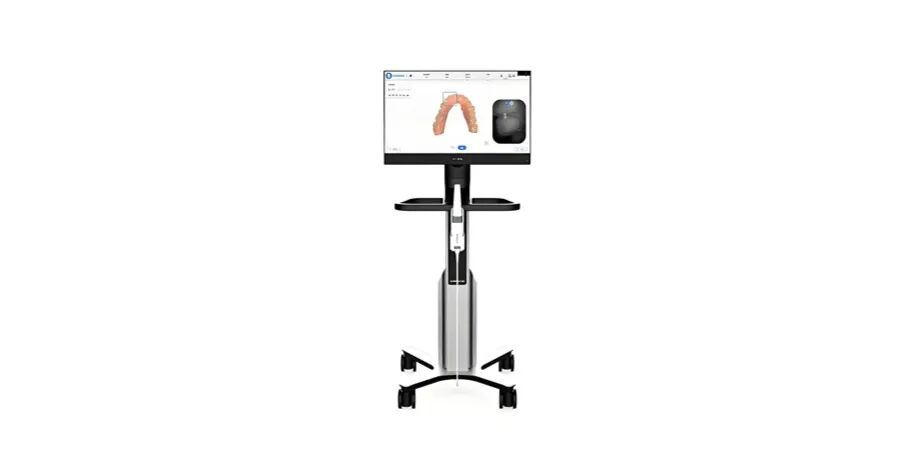
These core challenges of intraoral scanners can be addressed with ARM-based embedded hardware. The Qiyang RK3588 SoM, powered by an octa-core 64-bit high-performance processor, features high-bandwidth interfaces and powerful GPU compute capabilities to meet the device's requirements for lightweight design, low latency, and high real-time performance.
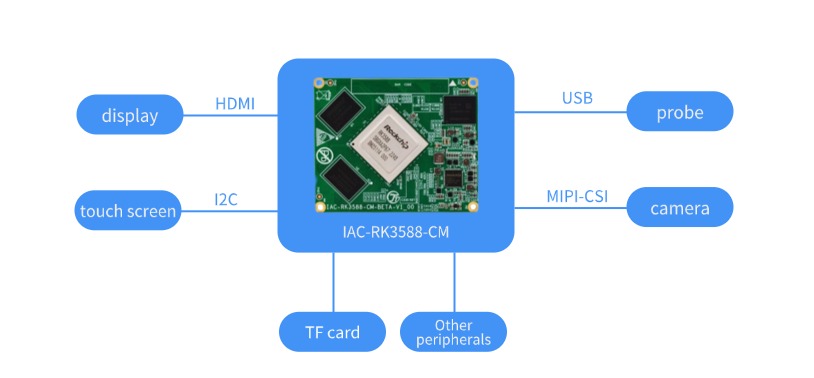
The SoM's built-in 6 TOPS NPU can run segmentation models to intelligently identify and remove interfering elements such as the tongue, cheeks, and saliva from the scan, retaining only critical tooth and gingival data, thereby effectively improving scanning accuracy.
Equipped with a Mali-G610 MP4 GPU supporting OpenGL ES 1.1/2.0/3.2 and OpenCL 2.2, the SoM delivers powerful 3D rendering and parallel image processing, enabling real-time rendering of oral 3D models with low-latency display, while accelerating image algorithm processing to meet the high real-time and smoothness demands of intraoral scanners.
Support for MIPI-DSI, HDMI, eDP, and DP display interfaces allows connection to 4K medical monitors, clearly presenting fine tooth textures and critical details for precise clinician review and patient education, enhancing effective doctor-patient communication.
Onboard USB 3.0, MIPI-CSI, I2C, and UART interfaces accommodate handheld scanning probes, cameras for synchronized image capture, and other application-specific peripherals.
The 8GB LPDDR4 + 64GB eMMC storage configuration, plus support for a TF card slot, meets the high-capacity storage requirements for real-time 3D data processing, model caching, and patient scan data.

