

Despite the widespread use of automated hematology analyzers, abnormal samples still require manual microscopic examination of blood smears. This process presents several significant challenges:
01 Low Efficiency: Manually adjusting focus, navigating the field of view, and counting hundreds of cells per sample can take 10–20 minutes per case.
02 Inconsistent Standards: Results may vary among physicians with different levels of experience due to subjective interpretation, affecting diagnostic consistency and accuracy.
03 Compute and Latency: Existing digital pathology scanners typically upload images to servers for processing, introducing data privacy risks and transmission delays, preventing a "scan-and-view" real-time workflow.
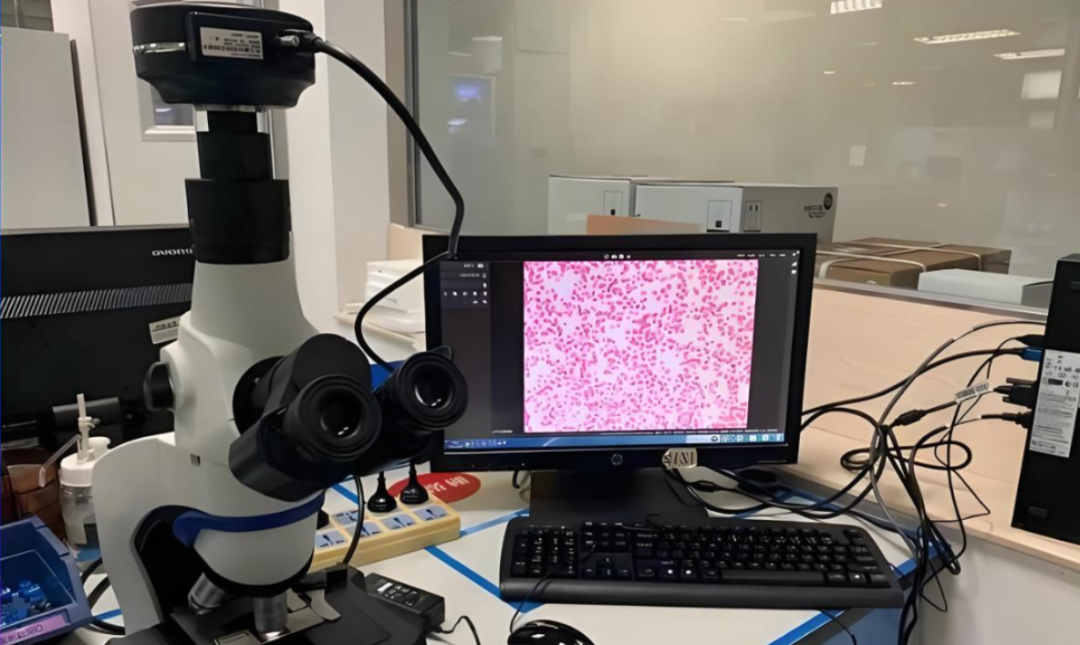
A high-performance edge computing box implementing an "MIPI direct capture + NPU local inference" model can upgrade conventional microscopes into AI-assisted diagnostic smart terminals. This approach significantly reduces the workload on laboratory physicians, enhances primary healthcare institutions' capacity for hematological disease screening, and overcomes the high cost, large footprint, and external PC dependency of traditional digital pathology solutions.
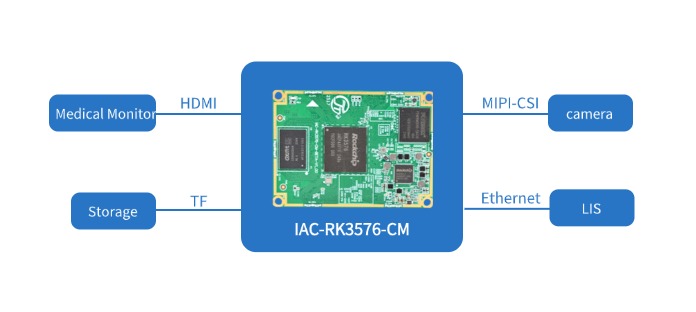
Qiyang RK3576 SoM, with its 4×Cortex-A72 + 4×Cortex-A53 big.LITTLE architecture and integrated 6 TOPS NPU, enables real-time local inference of AI models such as abnormal cell detection. Its rich I/O resources support MIPI direct capture, and compatibility with multiple peripherals and mainstream AI frameworks significantly reduces hardware integration and model deployment complexity, meeting the intelligent analysis needs of hematology.
The 6 TOPS NPU supports TensorFlow/MXNet/PyTorch/Caffe, enabling deployment of medical image segmentation models to accurately identify leukocytes, erythrocytes, and thrombocytes. Combined with the dual ISP for automatic white balance and color correction, it ensures faithful color reproduction of blood cell images, preventing color shifts that could affect AI-based interpretation.
Support for eDP, MIPI, and HDMI display interfaces, with resolutions up to 4K, allows connection to 4K medical monitors to clearly display cellular details (morphology, size, structure) for physician review and improved diagnostic accuracy.
Dual Gigabit Ethernet, Wi-Fi, and 5G connectivity enable rapid transmission of large volumes of blood cell analysis images and data, as well as integration with other hospital medical devices and information systems (LIS, HIS) for data sharing and improved overall clinical workflow efficiency.
The 4GB LPDDR4 + 32GB eMMC storage configuration, plus TF card slot, meets the caching and storage requirements for high-resolution whole-slide images.
Onboard MIPI-CSI, CAN, USB, UART, and other interfaces provide connectivity for cameras, medical devices, and other external equipment.

