

The TCM meridian analyzer is an instrument that, based on Traditional Chinese Medicine theory and incorporating modern technology, detects and analyzes the meridian status of the human body. Meridian detection essentially involves acquiring bioelectrical signals (bio-resistance/potential) from acupoints, followed by analysis and interpretation of these signals.
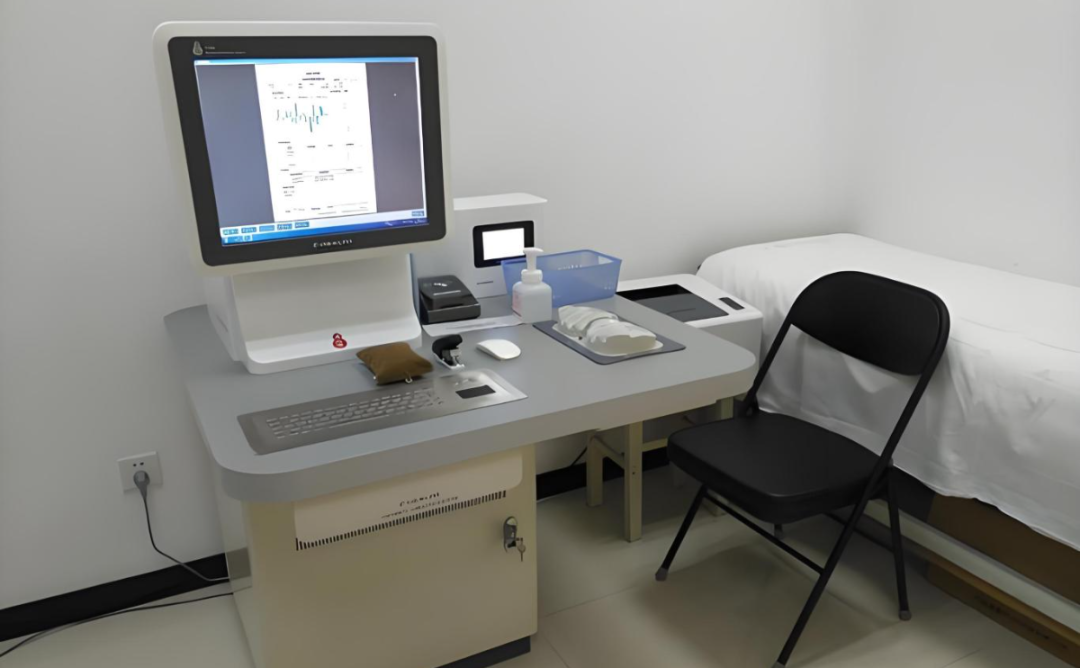 Traditional TCM meridian analyzers typically output only simple bar charts and 2D planar graphs, suffering from poor interactivity and lack of intuitiveness. They fail to render dynamic 3D human body models and often produce blurry output on larger clinical displays.
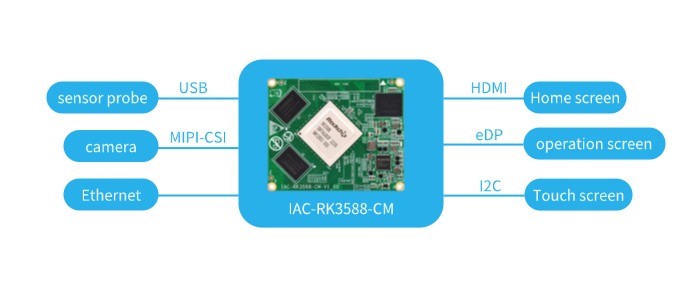
The Qiyang RK3588 SoM, with its octa-core processor running at up to 2.4 GHz, can process multi-acupoint impedance signals in parallel. The integrated Mali-G610 MP4 GPU enables high-resolution meridian visualization rendering, supporting 8K@60Hz or 4K@120Hz output for clear visual medical diagnostics and smooth dynamic interaction, meeting the application requirements of TCM meridian analyzers.
The built-in 6 TOPS NPU can run TCM auxiliary diagnostic models that integrate patient meridian data, facial images, and consultation information to generate comprehensive diagnostic reports.
Support for MIPI-DSI, HDMI, eDP, and DP display interfaces enables dual-screen independent display: one screen facing the patient to show 3D meridian models, and an operator screen facing the physician for data curves and control interface.
Onboard Gigabit Ethernet, plus optional 4G/5G and Wi-Fi modules, allows real-time upload of test reports to the hospital's HIS system or TCM health cloud platform. Support for USB, MIPI-CSI, GPIO, UART, I2C, and other expansion interfaces accommodates sensor probes, cameras, and other peripherals.
The 8GB LPDDR4 + 64GB eMMC storage configuration, plus TF card slot, ensures smooth and stable operation for multi-channel signal acquisition, AI algorithms, and high-resolution GUI, while enabling secure storage and rapid export of large volumes of patient records and meridian data.

