

With accelerating lifestyles and continuously rising labor costs, the productivity of traditional commercial kitchens has hit a bottleneck. Manual cooking increasingly struggles with challenges in throughput, flavor consistency, and cost control. Meanwhile, maturing IoT, automation, and AI technologies are driving the intelligent and standardized upgrade of kitchen equipment across the board.
In this context, the Smart Cooking Machine—a new generation of automated cooking equipment—integrates core technologies including automatic control, mechanical actuation, precision temperature management, and IoT. It can simulate manual wok-tossing, stirring, and heat control to achieve fully automated cooking, making it a key enabler for cost reduction, efficiency improvement, and standardized operations in the catering industry.
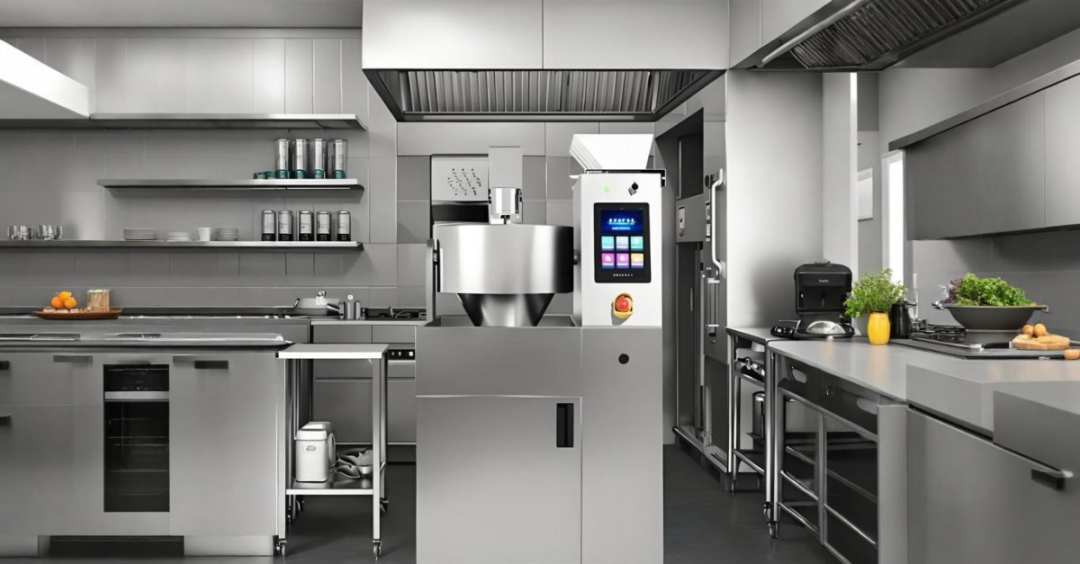
图片来源于网络
Smart Cooking Machines integrate human-machine interaction, equipment control, and system coordination functions, requiring the main control unit to offer stability and high reliability. The Qiyang RK3568 SoM, with its quad-core 64-bit Cortex-A55 CPU running at up to 2.0 GHz, integrated 1 TOPS NPU, and rich I/O resources, meets the demands for multi-task parallel processing, precise control, and intelligent interaction in these devices.
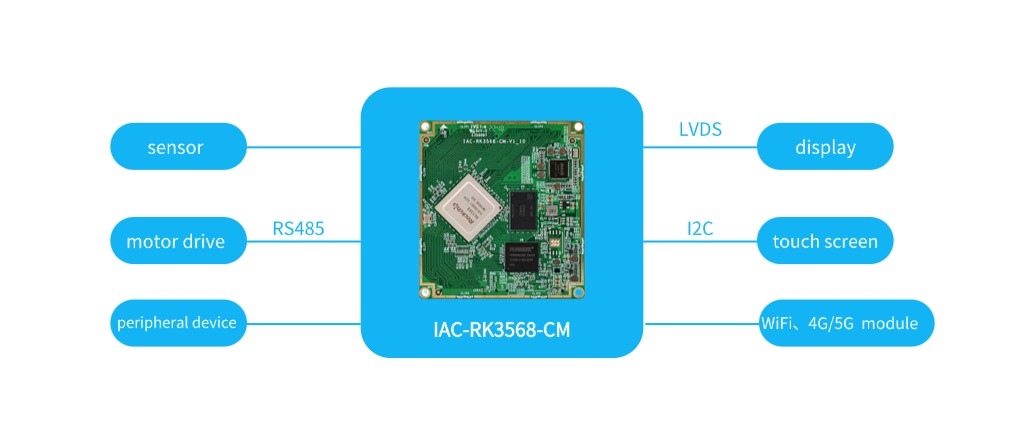
The Qiyang RK3568 SoM's quad-core processor (up to 2.0 GHz) and 1 TOPS NPU provide sufficient compute power for high-speed multi-sensor data acquisition, real-time processing, and responsive actuation. It can also run multiple intelligent cooking algorithms for precise temperature control, heat adjustment, and motion scheduling, enabling stable, intelligent, automated execution of the entire cooking process.
Support for MIPI-DSI, LVDS, eDP, and HDMI display interfaces flexibly accommodates various display sizes and types, providing stable and diverse human-machine interaction options.
Onboard dual Gigabit Ethernet, 4G/5G, and Wi-Fi connectivity ensure stable, high-speed network support for features such as cloud-based recipe synchronization and remote monitoring, improving cooking standardization and back-of-house operational efficiency.
Support for USB, RS232, RS485, and I2C interfaces facilitates integration with sensors, motor drives, and other peripheral devices, further enhancing the overall intelligence of the equipment.
An industrial-grade SoM option ensures long-term stable operation even in high-temperature, greasy, and electromagnetically noisy kitchen environments.

