

As technologies such as artificial intelligence, high-precision positioning, big data analysis, and vehicle connectivity continue to improve, autonomous shuttle vehicles are being adopted more rapidly. They are now commonly used in airports, business parks, tourist attractions, and campuses. These vehicles help reduce passenger congestion and operate reliably in complex environments.
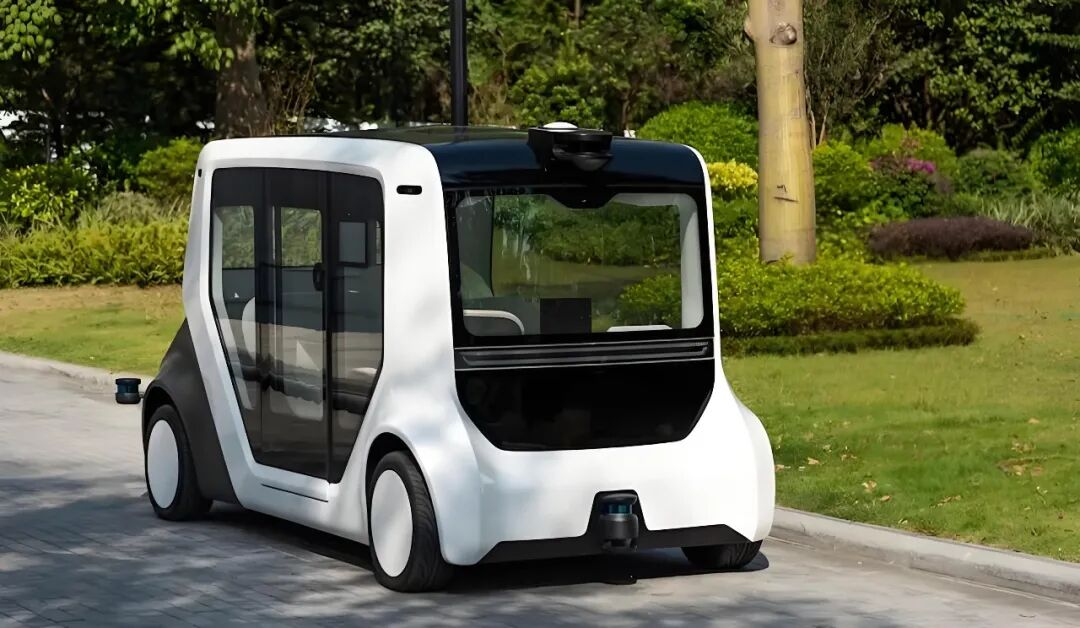
Autonomous shuttle vehicles integrate technologies such as vision sensing, LiDAR, high-precision positioning, and intelligent analysis and decision-making to achieve autonomous driving. This places high demands on the onboard computing platform to handle complex and real-time tasks.
The Qiyang RK3588 System on Module is built on an octa-core 64-bit high-performance processor, enabling simultaneous processing of data from multiple sensors for accurate environmental perception. With a 6 TOPS NPU and a powerful GPU, it delivers strong AI computing and image processing capabilities, supporting obstacle recognition and path planning. In addition, its rich interface resources provide flexible support for various autonomous driving and automated parking functions.
.jpg)
The core module is powered by a Rockchip processor featuring a quad-core Cortex-A76 and quad-core Cortex-A55 architecture, with a maximum clock speed of up to 2.4 GHz. It is capable of simultaneously processing data from cameras, LiDAR, and positioning sensors, enabling real-time acquisition and analysis of road conditions, pedestrians, and surrounding vehicles. This provides a solid foundation for comprehensive environmental perception and intelligent decision-making.
The module integrates a Mali-G610 MP4 GPU and a 6 TOPS NPU, and supports mainstream deep learning frameworks. It is capable of running autonomous driving AI algorithms to enable high-accuracy environmental perception, intelligent decision-making, and safe path planning, ensuring efficient and reliable autonomous operation of shuttle vehicles.
The board integrates a wide range of interfaces, including USB 3.0, RS485, RS232, and MIPI-CSI, allowing connection to devices such as LiDAR, millimeter-wave radar, positioning modules, and cameras. It supports 4G/5G and Wi-Fi modules to enable cloud connectivity, remote monitoring, and centralized scheduling. In addition, multiple display interfaces—including MIPI DSI, HDMI, eDP, and DP—are supported to meet various in-vehicle display requirements.
The core module can be configured with industrial-grade components to handle complex outdoor environments. This ensures long-term, reliable, and stable operation of autonomous shuttle vehicles even under harsh conditions.
As an emerging mode of transportation, autonomous shuttle vehicles are reshaping the way people travel and improving overall quality of life. They also have a significant impact on economic development, urban environment improvement, and technological innovation. As technologies continue to advance and the market becomes more mature, autonomous shuttle vehicles are expected to play an increasingly important role in future intelligent transportation systems.

